 Versailles
Prevention
Regular dental visits help detect cavities, gum problems and risk factors before they become urgent.
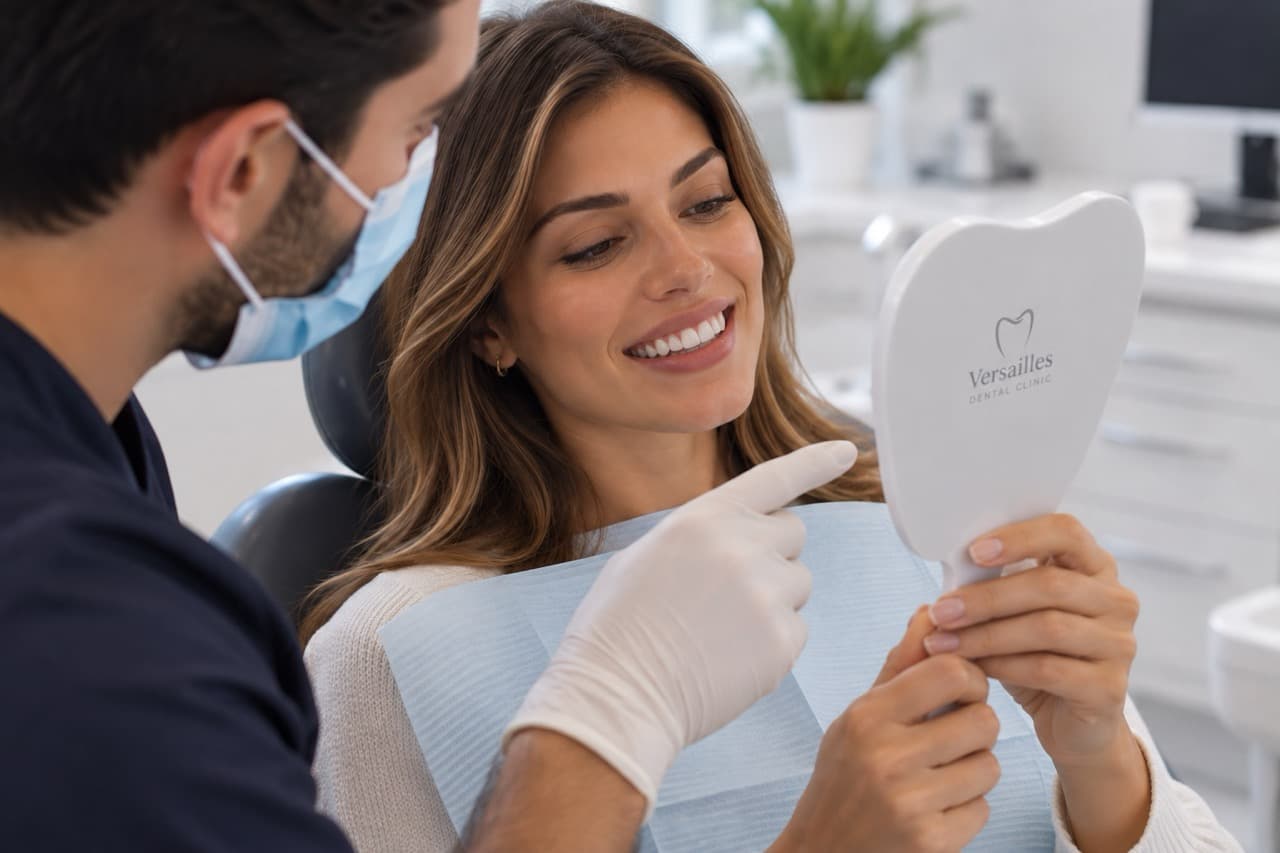
Prevention includes dental check-ups, useful X-rays, scaling and oral hygiene advice adapted to each patient.
At Versailles Dental Clinic, preventive follow-up helps adults, children and families maintain long-term oral health.
Why consult if I have neither pain nor a visible problem?
Many dental problems develop for a long time without causing pain: early cavities, gum inflammation or loosening in particular. Regular check-ups allow them to be detected early and, often, to offer simpler and more conservative treatment.
How often should you consult your dentist?
The frequency depends on each patient. For many adults, an annual check-up may be suitable, while closer follow-up may be recommended in the presence of frequent cavities, periodontal disease, implants or particular risk factors.
Should X-rays be taken at every check-up?
No. X-rays are not systematic. They are only taken when justified by the clinical examination, medical history or the patient's risk level, in order to limit exposure to X-rays to what is strictly necessary.
What type of toothbrush should you choose?
Choose a soft toothbrush, manual or electric. Excessive pressure does not improve cleaning and can promote tooth wear or gum recession.
How should you brush your teeth properly?
It is recommended to brush your teeth twice a day for about two minutes, cleaning all tooth surfaces and the junction between the teeth and gums.
Which toothpaste should you choose and how much fluoride?
Fluoride helps strengthen enamel and prevent cavities. In young children, a toothpaste containing about 1,000 ppm of fluoride is generally used, in an amount suited to age. From age 6 and in adults, a toothpaste of around 1,450 ppm is generally recommended. The dentist can adapt these recommendations to the cavity risk.
Are dental floss or interdental brushes necessary?
A toothbrush has difficulty cleaning the spaces between teeth. Suitable cleaning with floss or brushes helps prevent cavities and gum disease.
How can adults prevent cavities?
Prevention relies on regular brushing with fluoride toothpaste, interdental cleaning and limiting the frequency of sugary foods and drinks.
My gums bleed when I brush my teeth: is this normal?
Regular bleeding should not be dismissed. It is often linked to gum inflammation. A consultation allows the cause to be investigated and its progression to be avoided.
What is scaling for?
Scaling removes tartar deposits that can no longer be removed by simple brushing. Its frequency is adapted to each patient.
Can a tooth that doesn't hurt have a cavity?
Yes. A cavity can remain painless for a long time. Pain may only appear at a more advanced stage, hence the value of preventive check-ups.
Why do I have bad breath despite brushing?
Bad breath can have several origins: plaque, coated tongue, gum inflammation, cavity or dry mouth. When it persists, a dental check-up is recommended.
Does teeth whitening damage teeth?
When indicated and carried out with suitable products under professional supervision, tooth whitening does not damage enamel. Temporary sensitivity may nevertheless appear.
When should a crown or filling be replaced?
A restoration does not have to be replaced solely because of its age. Its condition, seal and the health of the tooth and surrounding tissues must be assessed.